
Hubert Dreyfus
Philosopher & AI Critic
About
Hubert Dreyfus (1929–2017) was an American philosopher at UC Berkeley whose critique of artificial intelligence profoundly shaped the field. Drawing on phenomenologists like Heidegger and Merleau-Ponty, he argued in 'What Computers Can't Do' (1972) and 'What Computers Still Can't Do' (1992) that human intelligence depends on embodied, situated expertise that cannot be captured by rule-based symbolic AI. His critique of 'Good Old-Fashioned AI' (GOFAI) proved prescient, and his emphasis on embodiment, intuition, and the role of the body in cognition continues to challenge assumptions about what AI can achieve.
Key Contributions
- Wrote 'What Computers Can't Do,' arguing that symbolic AI ignored embodied skill, background practices, and situated coping
- Used Heidegger and Merleau-Ponty to challenge the assumption that expertise is stored as explicit rules
- Developed the Dreyfus skill-acquisition model with Stuart Dreyfus, from novice rule-following to expert intuitive action
- Interpreted Heidegger for English-speaking philosophy through works such as 'Being-in-the-World'
- Forced AI researchers to confront tacit knowledge and embodiment long before those became mainstream cognitive-science themes
- His critique was prescient about GOFAI's limits, though connectionism and modern ML complicated some of his stronger claims
Videos & Interviews
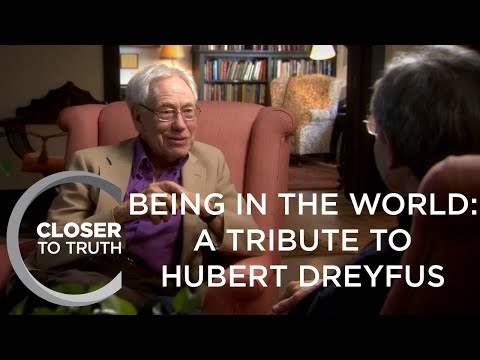
Being in the World: A Tribute to Hubert Dreyfus | Closer To Truth
Closer to Truth tribute exploring Dreyfus's lasting impact on philosophy and AI critique
View Details
Being in the World (Full Documentary)
Award-winning documentary featuring Dreyfus on Heidegger, embodiment, and skilled coping
View Details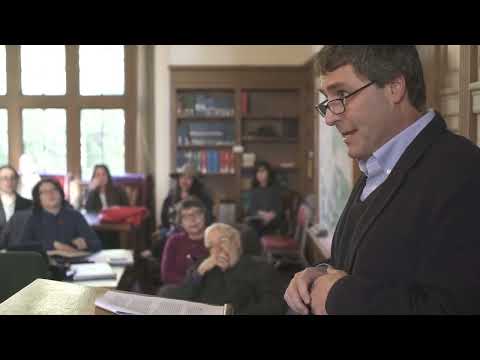
Celebrating Hubert Dreyfus: Sean Kelly -- "The Teacher" (part 1)
Sean Kelly's tribute to Dreyfus as a teacher and mentor at the memorial celebration
View Details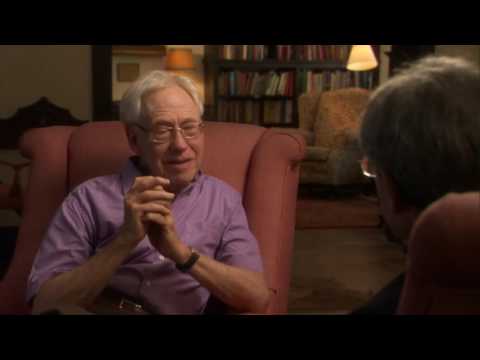
Hubert Dreyfus - Why is Consciousness so Baffling?
Closer to Truth interview on the hard problem of consciousness and phenomenological approaches
View Details

