
Hung-yi Lee
Professor, National Taiwan University
About
Hung-yi Lee (李宏毅) is a professor at National Taiwan University's Department of Electrical Engineering with a joint appointment in Computer Science & Information Engineering. He earned his Ph.D. from NTU in 2012, followed by a postdoctoral fellowship at Academia Sinica and a visiting scientist position at MIT CSAIL. His research focuses on machine learning, speech processing, and human-machine interaction. He is widely known across the Chinese-speaking world for his free YouTube lecture series on machine learning and generative AI, which have attracted millions of views and earned him the nickname 'the Pokémon Master of ML' for his use of anime examples to explain complex concepts.
Key Contributions
- Built one of the Chinese-speaking world's most important open machine-learning curricula through freely available NTU lectures
- Uses anime, games, and pop-culture examples to make deep learning, speech, and generative AI less intimidating without removing the math
- Researches speech processing, spoken language understanding, and unsupervised or weakly supervised ASR
- Keeps updating courses as the field shifts, connecting classical ML foundations with transformers, LLMs, and generative AI practice
- Trains Taiwan's AI talent pipeline at scale by combining NTU courses, public videos, talks, and practical assignments
- His teaching style is unusually accessible, though its popularity can sometimes overshadow his technical research contributions
Videos & Interviews

【生成式AI】速覽圖像生成常見模型
Overview of common image generation models in the generative AI landscape
View Details
【生成式AI時代下的機器學習(2025)】第一講:一堂課搞懂生成式人工智慧的技術突破與未來發展
2025 ML course opening lecture covering breakthroughs and future directions in generative AI
View Details
ChatGPT 原理剖析 (1/3) — 對 ChatGPT 的常見誤解
First part of a three-part series dissecting how ChatGPT works and addressing common misconceptions
View Details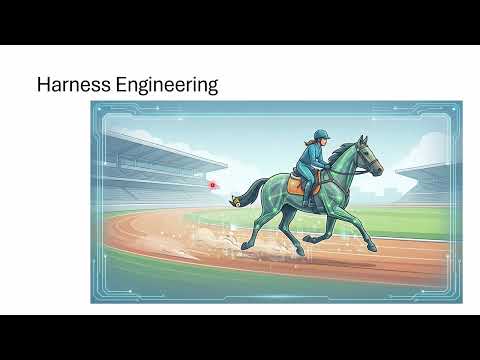
Harness Engineering:有時候語言模型不是不夠聰明,只是沒有人類好好引導
Lecture on harness engineering, showing that language models often underperform not from lack of capability but from insufficient human guidance
View Details
