
關於
Marcelo Gleiser (born 1959) is a Brazilian-American theoretical physicist and astronomer, the Appleton Professor of Natural Philosophy at Dartmouth College, where he has taught since 1991. His research spans cosmology, nonlinear field theory, and the origin of life, including the co-discovery of oscillons and early work applying information theory to measure complexity in nature. He is also a prominent public intellectual on the relationship between science, philosophy, and religion, and in 2019 received the Templeton Prize for his work on humanity's search for meaning. His books — including The Island of Knowledge and The Blind Spot (2024, with Adam Frank and Evan Thompson) — argue that science cannot fully escape the human experience from which it is conducted, a theme that bears directly on debates about machine intelligence and what knowing means.
主要貢獻
- Received the 2019 Templeton Prize for work on science, philosophy, and the search for meaning
- Co-discovered oscillons, long-lived time-dependent configurations in nonlinear field theory
- Co-authored The Blind Spot (2024) with Adam Frank and Evan Thompson on science's neglect of human experience
- Wrote The Island of Knowledge, on the inherent limits of scientific knowledge
- Founded Dartmouth's Institute for Cross-Disciplinary Engagement to bridge the sciences and humanities
書籍

影片與訪談

Marcelo Gleiser on Why Science Cannot Ignore Human Experience
Gleiser discusses his book The Blind Spot and his argument that science must account for the human experience from which it is conducted.
View Details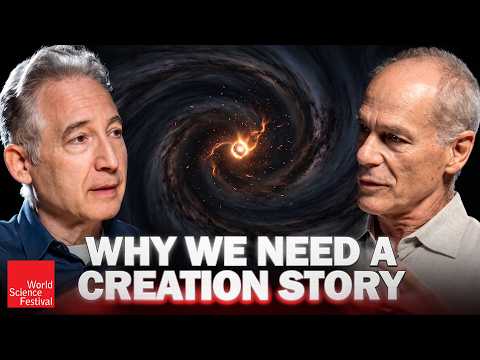
Are There Limits To What Physics Can Explain? | World Science Festival
Do we invent the laws of physics, or find them? And why are we driven to explain at all? Brian Greene sits with Marcelo Gleiser — theoretical physicist at Dartmouth and Templeton Prize winner — in a conversation that moves between physics, philosophy, and the psychology of mortality.
View Details思想連結

Adam Frank
曾經合作天體物理學教授・羅徹斯特大學
兩位物理學家與哲學家 Evan Thompson 合著《The Blind Spot》(2024):科學習慣從「無處」去描繪實在,這個習慣遮住了每一次測量都依賴的生活經驗。論證橫跨時間、宇宙學、量子理論、生命,以及 AI 與心智。提出這個主張的是兩位在第一線工作的物理學家,而不只是哲學家,這本身就是重點:盲點從實驗室裡面也看得見。
mitpress.mit.edu · en.wikipedia.org

Evan Thompson
曾經合作心靈哲學家暨認知科學學者
2019 年,也就是 Gleiser 獲得坦伯頓獎的那一年,他與 Thompson 和 Adam Frank 在 Aeon 發表了那篇為科學的「盲點」命名的文章。五年後,他們把它寫成《The Blind Spot》(MIT Press,2024)。這個組合本身就是論證的縮影:一位理論物理學家與一位心靈哲學家都同意,科學看不見的,正是它出發時所依靠的經驗,而這不是多一點數據就能補上的缺口。
aeon.co · en.wikipedia.org · en.wikipedia.org

Brian Greene
曾經對談理論物理學家暨科學傳播者
在 Greene 主持的世界科學節舞台上,他與 Gleiser 討論:物理定律是被發現的,還是被發明的?我們又為何非解釋不可?兩位物理學家都信任科學方法,分歧在方法外面的那個框架:Greene 傾向把人的意義視為物理學留下的空間,Gleiser 則主張,認識者永遠無法從被認識之物中減去。這場對談收錄在本站。
youtube.com

