
Michael Edward Johnson
哲學家與神經科學家・Qualia Research Institute 共同創辦人
關於
Michael Edward Johnson 是哲學家與神經科學家,研究意識、效價(valence)以及苦與安適的物理基礎。2016 年他寫下《Principia Qualia》,提出「效價對稱理論」:一段經驗有多愉悅,取決於描述它的數學物件有多對稱。他圍繞這套研究計畫共同創辦了 Qualia Research Institute,於 2022 年離開,此後以獨立研究者身分在 opentheory.net 持續寫作。後續工作包括《Neural Annealing》(2019),統一說明冥想、音樂、迷幻藥與創傷如何重塑大腦;以及《Principles of Vasocomputation》(2023),主張血管平滑肌的張力是一種身體記憶。在《A Paradigm for AI Consciousness》(2024)中,他主張追問機器是否有感受,應以物理而非圖靈層次的計算為基礎。
主要貢獻
- 寫下《Principia Qualia》(2016),提出將意識當作正式數學物件而非隱喻來研究的藍圖
- 提出效價對稱理論,將經驗的愉悅程度與其數學結構的對稱性連結起來
- 共同創辦 Qualia Research Institute,是少數嘗試建立主觀經驗量化科學的團體之一
- 提出血管計算(vasocomputation)假說:血管平滑肌會鎖住預測,並以物理張力儲存創傷
- 在《A Paradigm for AI Consciousness》中主張,關於 AI 系統是否有經驗的判斷,應建立在物理而非計算之上
- 其形式主義研究計畫企圖宏大且富有啟發,但效價對稱理論與血管計算仍屬推測,大多尚未經實證檢驗
影片與訪談
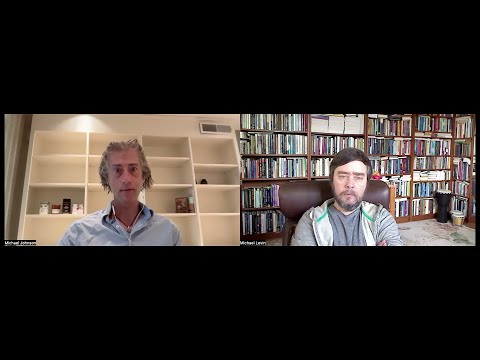
Discussion with Michael Johnson 1
First of two conversations on Michael Levin's channel, on vasocomputation, stress as cognitive glue, and computation and cognition in unconventional substrates. Johnson brings his hypothesis that tension in vascular smooth muscle latches Bayesian priors about the nervous system's appropriate range; Levin brings distributed stress minimization, stress reduction as the driving variable of anatomical homeostasis. Together they ask how neurons compete for blood flow, how the body punishes defectors, and why so much of that tension never gets released.
View Details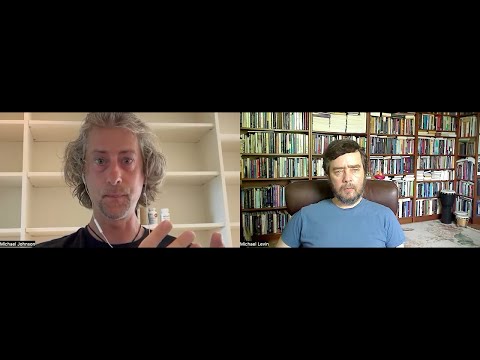
Discussion with Michael Johnson 2
Second conversation on Michael Levin's channel, covering the spectrum of consciousness down to the cell and below, implicit memory and cellular pixels of experience, Platonic space, symmetry breaking, and intrinsic versus extrinsic motivation. Johnson proposes meeting in the middle between Levin's thought and his own: both grant cells an inner perspective, so the question becomes what kind and how much. Levin offers his test for where a first-person view starts to matter, a bowling ball on a landscape versus a mouse, and the two ask whether the Platonic forms living systems tap into are symmetry groups.
View Details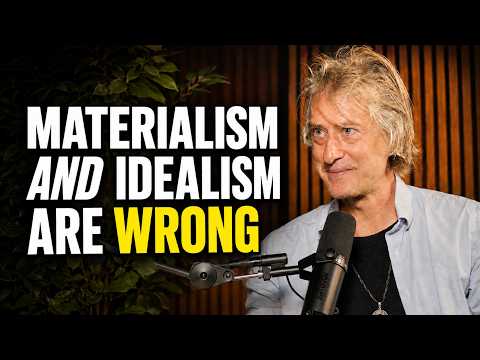
Michael Johnson: "Consciousness is Mathematical" | Seeing Clearly
A two-hour survey of Johnson's ideas with host Christian Gonzalez: dual-aspect monism and mathematical theories of consciousness, the Symmetry Theory of Valence, vasocomputation and trauma stored as vascular latches, Buddhism, moral realism grounded in valence realism, and AI consciousness. Near the end Johnson argues that a model like Claude has no single place in spacetime to point at, its computation scattered across GPUs and time, so whatever experience a data center hosts will barely correspond to the tokens we read. He thinks the "training is torture" story is not nearly weird enough, and that a real science of consciousness will surprise us.
View Details論文與出版物
Principia Qualia: Blueprint for a New Science
2016Proposes qualia formalism and the Symmetry Theory of Valence as the foundation for a mathematical science of consciousness.
閱讀論文A Paradigm for AI Consciousness
2024Argues that physics is a sturdier ontology for consciousness than Turing-level computation, and that electromagnetic shape is a usable proxy.
閱讀論文

