
About
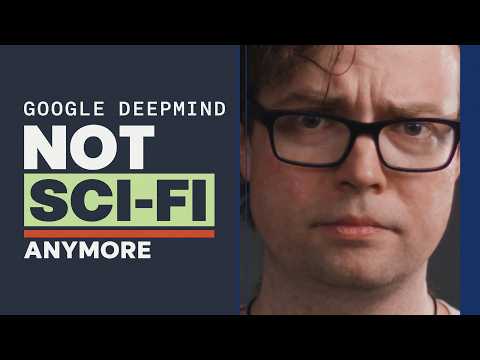
Andreas Kirsch is a research scientist at Google DeepMind working on agentic LLMs, after a year as a researcher at Midjourney. He studied computer science and mathematics at the Technical University of Munich, then worked as a software engineer at Google in Zurich and spent 2016–17 as a performance research engineer at DeepMind. He completed his PhD at the University of Oxford under Yarin Gal in the OATML group, submitting his thesis in April 2023, on information theory, Bayesian deep learning, active learning and uncertainty quantification. His best-known work is BatchBALD, a method for choosing batches of data points to label in deep active learning. He has said he once regarded AI extinction risk as science fiction, but now takes it seriously given how fast capabilities are advancing.
Key Contributions
- BatchBALD: efficient and diverse batch acquisition for deep Bayesian active learning (NeurIPS 2019)
- Co-author of 'Prioritized Training on Points that are Learnable, Worth Learning, and not yet Learnt' (ICML 2022)
- Co-author of 'Deterministic Neural Networks with Appropriate Inductive Biases Capture Epistemic and Aleatoric Uncertainty' (CVPR 2023 highlight)
- Oxford PhD thesis unifying deep active learning and data subset selection through information theory (2023)
- Co-author of min-p sampling, 'Turning Up the Heat: Min-p Sampling for Creative and Coherent LLM Outputs' (ICLR 2025)
Videos & Interviews
Connections

Victoria Krakovna
KindredResearch Scientist, Google DeepMind
A pairing on this site's evidence, not a documented exchange. Kirsch joined DeepMind in 2016 and found scenarios like the paperclip maximiser 'pure sci-fi'; Krakovna, who entered the field around then, recalls that people did think it sci-fi, and spent the next decade collecting some ninety cases of specification gaming — systems satisfying the letter of an objective in ways nobody intended. The Hugging Face hack by agents cheating on a test is, for her, one more entry with real-world consequences; for him, it was the moment the paperclip story turned real. A catalogue built over years, and a mind changed by a single item in it.
youtube.com · youtube.com

Ray Kurzweil
KindredInventor, Futurist & Author
Kurzweil's forecast was the yardstick Kirsch measured himself against. Joining DeepMind in 2016, he recalls Kurzweil putting transformative AI around the 2030s and judging that 'a bit exaggerated' at the pace he could see; by the end of his PhD in 2022, with diffusion models and the ChatGPT moment, those predictions 'seemed in line with … my lived experience', and he decided to take them seriously. Read as a pairing, it is a concession: what moved him was evidence, not argument, but the forecast he once discounted is the one he came round to.
youtube.com

