
Andy Clark
Philosopher & Cognitive Scientist
About
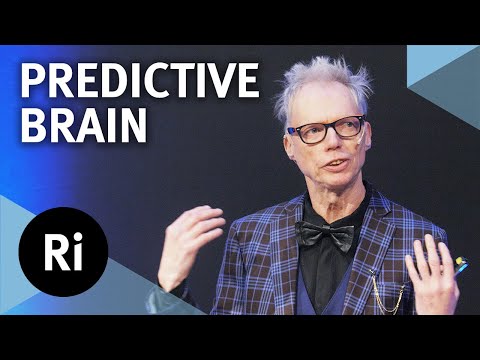
Andy Clark is a philosopher and cognitive scientist at the University of Sussex, known for his influential work on the extended mind, embodied cognition, and predictive processing. His 'extended mind' thesis, developed with David Chalmers, argues that cognition extends beyond the brain into tools and environment. His recent work on predictive processing frames the brain as a 'prediction machine,' offering a unified theory of perception, action, and cognition with profound implications for understanding both biological and artificial intelligence.
Key Contributions
- Co-authored 'The Extended Mind' with David Chalmers, arguing that tools and environments can become parts of cognitive systems
- Helped make embodied and embedded cognition a serious alternative to brain-bound models of mind
- Wrote 'Natural-Born Cyborgs,' arguing that humans are unusually able to incorporate tools into thought and agency
- Developed predictive-processing accounts of perception and action in 'Surfing Uncertainty' and 'The Experience Machine'
- Offers a vocabulary for AI that treats intelligence as agent-environment coupling, not just internal representation
- His extended-mind arguments are influential, though critics worry they blur the boundary between genuine cognition and useful scaffolding
Questions they sharpened View the streams
Are we separate from our machines?
2003We are natural-born cyborgs. The human mind is built to annex notebooks, instruments, and now devices into itself; the skin-bag was never the real boundary of the self, only the most visible one.
Does prediction amount to understanding?
2013The brain is itself a prediction machine — perception is controlled hallucination, the mind's best guess corrected by error.
Videos & Interviews

Papers & Publications
Connections

David Chalmers
CollaboratedPhilosopher of Mind
'The Extended Mind' (Analysis, 1998) is theirs jointly: if Otto's notebook plays for him the role Inga's biological memory plays for her, then the belief is Otto's even though it sits outside his skin. Written before smartphones, it has become the standard instrument for asking what remains of a mind that offloads its recall — and increasingly its reasoning — onto machines.
consc.net

Karl Friston
Influenced byNeuroscientist & Theoretical Biologist
Clark is predictive processing's philosophical advocate, and Friston's prediction-error framework is the machinery underneath 'Whatever Next?' and Surfing Uncertainty. But the inheritance is deliberately partial: Clark famously confines the free-energy principle to an appendix, taking the working idea — brains as prediction machines — while declining the grand physics of self-organization behind it. How much of Friston one must buy is itself a live question in the field.
dericbownds.net · Surfing Uncertainty: Prediction, Action, and the Embodied Mind (OUP, 2016)

Anil Seth
KindredProfessor of Cognitive & Computational Neuroscience, University of Sussex
Two readings of the same idea, pursued from different chairs. Clark made predictive processing philosophically respectable — the mind as a prediction engine, the boundary between brain, body and world negotiable rather than given. Seth took the same machinery into the laboratory and pointed it at consciousness and the body, arriving at a claim Clark's framework permits but does not require: that experience is not merely predicted but predicted from the inside out, by something with a stake in staying alive.

Geoffrey Hinton
Influenced byAI Pioneer & Researcher
'Whatever Next?' builds its case for the predictive brain on Hinton's machinery — the Helmholtz machine, a network that teaches itself to perceive by learning to generate its own sensory patterns. The site's question 'Does prediction amount to understanding?' holds their lenses together, because Clark took a training trick from machine learning and argued it was what brains had been doing all along.
cambridge.org

