
Daniel Dennett
Philosopher & Cognitive Scientist
About
Daniel Dennett (1942–2024) was one of the most influential philosophers of mind and cognitive science. His work on consciousness, free will, and evolution shaped how we think about minds—both biological and artificial. His 'multiple drafts' model of consciousness and concept of the 'intentional stance' remain central to debates about whether AI systems can truly be conscious or merely simulate understanding. A fierce critic of what he called 'the Cartesian theater,' he argued that consciousness is not a single unified experience but an emergent property of many parallel processes.
Key Contributions
- Developed the intentional stance, explaining how treating systems as belief-and-desire agents can be predictively useful
- Rejected the 'Cartesian theater' and proposed the multiple-drafts model of consciousness in 'Consciousness Explained'
- Used evolution and computation to naturalize mind, free will, and meaning without invoking a central inner observer
- Wrote 'Darwin's Dangerous Idea' and 'Breaking the Spell,' bringing evolutionary explanation into debates over culture, religion, and agency
- Gave AI debates a way to ask when agency is a useful explanatory stance rather than a hidden essence
- His deflationary view of consciousness is influential but fiercely disputed by philosophers who think it explains away lived experience
Videos & Interviews
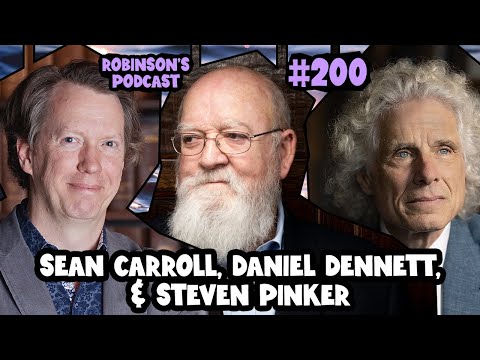
Sean Carroll, Daniel Dennett, & Steven Pinker: AI, Parapsychology, Panpsychism, & Physics Violations
A wide-ranging discussion with physicist Sean Carroll, philosopher Daniel Dennett, and cognitive scientist Steven Pinker on AI, parapsychology, panpsychism, and what would count as a violation of physics.
View Details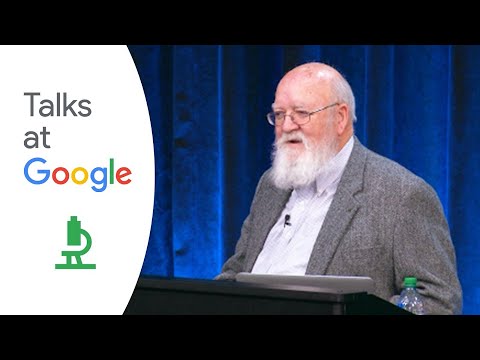
Daniel Dennett: From Bacteria to Bach and Back
Talks at Google - Dennett on how comprehending minds arise from mindless natural selection
View Details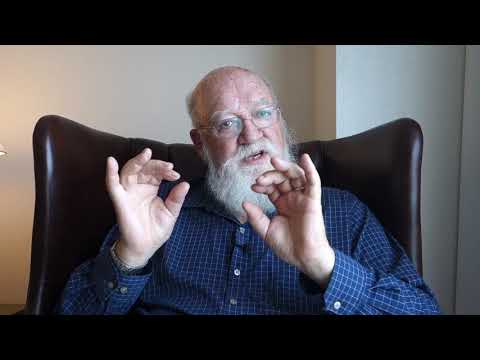
Daniel Dennett - Information & Artificial Intelligence
A Daniel Dennett talk on information, meaning, and artificial intelligence, including how simple biological systems help ground semantics and how those ideas scale up into human cognition and AI.
View Details
The illusion of consciousness | Dan Dennett
TED Talk on why we think we understand consciousness when we don't
View Details
