
Grace Hopper
Computer Scientist & Naval Rear Admiral
About
Grace Hopper (1906–1992) was an American computer scientist and United States Navy Rear Admiral who was a pioneer of computer programming. She invented the first compiler, which translated written language into computer code, and was instrumental in developing COBOL, one of the first high-level programming languages designed for business use. She popularized the term 'debugging' after finding an actual moth causing problems in the Harvard Mark II computer. Known as 'Amazing Grace,' her vision that programming languages should be closer to English than machine code revolutionized computing and made it accessible to a far wider audience.
Key Contributions
- Programmed the Harvard Mark I and helped define what programming looked like before software was a recognized profession
- Created the A-0 system and championed compilers, arguing that machines should adapt toward human-readable programming
- Helped develop COBOL, making business computing more portable and accessible beyond mathematicians and hardware specialists
- Worked on language standardization so programs could move more reliably across machines and vendors
- Popularized 'debugging' through the famous Mark II moth story, though the term itself predates the incident
- Her Navy career and public lectures made computing tangible, from nanosecond wire demos to advocacy for standard languages
Videos & Interviews
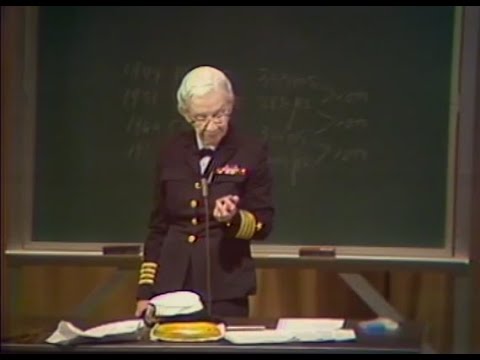
Grace Hopper NSA Lecture: Future Possibilities (Part 2)
NSA Lecture (1982): 'Future Possibilities: Data, Hardware, Software, and People' - Part Two (~1 hour)
View Details
Grace Hopper NSA Lecture: Future Possibilities (Part 1)
NSA Lecture (1982): 'Future Possibilities: Data, Hardware, Software, and People' - Part One (~1 hour)
View DetailsConnections

Margaret Hamilton
KindredComputer Scientist & Software Engineering Pioneer
Neither woman invented software; each insisted it be taken seriously as something built. Hopper argued the machine should come toward human language and wrote the compiler that made the argument stick; Hamilton, a generation later, argued that code carrying human lives deserved the word 'engineering' and made it stick by landing on the Moon. Both were pushing against the same assumption — that the real work was the hardware.

Ada Lovelace
KindredMathematician & First Computer Programmer
A pairing around translation. Lovelace's Notes began as a translation of someone else's paper about someone else's machine and grew into the first program; Hopper's compiler was a translation engine that let a person write something closer to a sentence and left the machine to make it executable. In both cases the decisive move was refusing to meet the machine on its own terms.

