
Hilary Putnam
Philosopher of Mind, Language & Mathematics
About
Hilary Putnam (1926–2016) was an American philosopher and one of the central figures in analytic philosophy of mind, spending most of his career as Cogan University Professor at Harvard. In the late 1960s he developed functionalism — the view that mental states are defined by their functional role, not their physical substrate — arguing via 'multiple realizability' that a mind could in principle be realized in silicon as well as neurons. It became the philosophical license for the whole idea that machines might think. Characteristically, he later became one of functionalism's most forceful critics, rejecting it in Representation and Reality (1988). He is equally known for semantic externalism — 'meaning ain't in the head' — and the Twin Earth thought experiment.
Key Contributions
- Developed functionalism and multiple realizability, the argument that mind is substrate-independent
- Later repudiated functionalism in Representation and Reality (1988), a rare public reversal
- Formulated semantic externalism and the Twin Earth thought experiment ('meaning ain't in the head')
- Contributed to the causal theory of reference alongside Saul Kripke
- Proved the Davis–Putnam foundations of automated theorem proving and worked on Hilbert's tenth problem
Questions they sharpened View the streams
Videos & Interviews
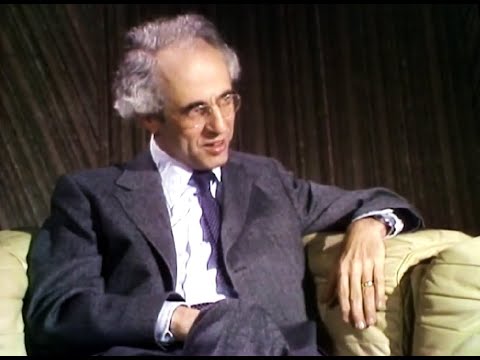
The Philosophy of Science - Hilary Putnam & Bryan Magee
Putnam and Bryan Magee discuss the philosophy of science in the classic 1977 BBC 'Men of Ideas' series.
View Details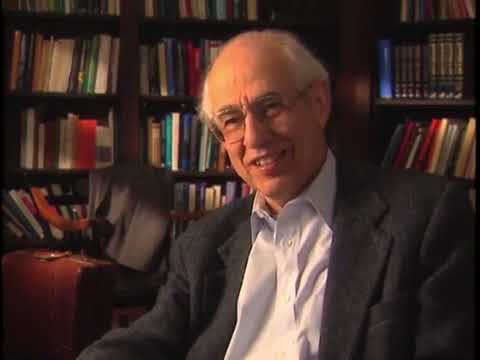
Hilary Putnam Interview - Mind, Truth & Science (1998)
A wide-ranging interview touching on functionalism, externalism, and the Turing Test.
View Details
