
About
Jay Wright Forrester (1918–2016) was an American engineer who built one of the first digital computers and then founded a field for understanding why human systems resist our intentions. At MIT he led Project Whirlwind, co-invented magnetic-core memory, the dominant computer memory from the mid-1950s to the mid-1970s, out of what he called 'necessity being the mother of invention,' and carried the work into the SAGE air-defense system. He then turned feedback engineering on firms, cities and the planet, founding system dynamics with 'Industrial Dynamics' (1961), 'Urban Dynamics' (1969) and 'World Dynamics' (1971), the model behind the Club of Rome's 'The Limits to Growth.' His recurring finding was that complex systems are counterintuitive: the few high-leverage policies are usually being pushed 'in the opposite direction.'
Key Contributions
- Led MIT's Project Whirlwind, one of the first real-time digital computers
- Co-invented magnetic-core memory, standard computer memory for two decades
- Directed the computer work behind the SAGE air-defense system
- Founded system dynamics with 'Industrial Dynamics' (1961)
- Built 'World Dynamics' (1971), the basis of 'The Limits to Growth'; IEEE Medal of Honor (1972)
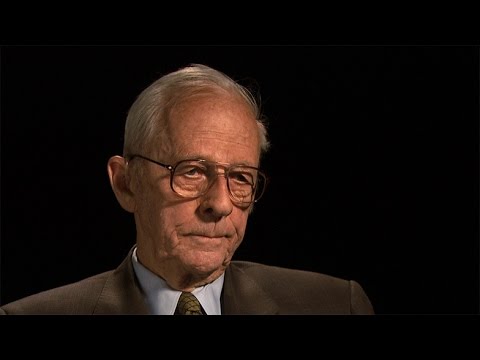
Videos & Interviews
Connections

Donella Meadows
InfluencedEnvironmental Scientist & Systems Thinker
Meadows learned system dynamics in Forrester's group at MIT, and The Limits to Growth (1972), which she led, grew out of his World Dynamics model built for the Club of Rome. Her most quoted essay, 'Leverage Points', opens with his observation that 'people know intuitively where leverage points are,' and that they almost always push them 'IN THE WRONG DIRECTION!' He gave her the method. What she added was the voice that let people outside MIT hear it.
donellameadows.org · en.wikipedia.org · youtube.com

Edward Lorenz
In contrastMeteorologist & Founder of Chaos Theory, MIT
Two MIT men in the early 1960s, each running nonlinear feedback systems on early computers, drew opposite lessons from what they saw. Lorenz found that a deterministic system can be unpredictable in principle, so the forecast has a horizon no better model will pass. Forrester found that such systems are counterintuitive but can be modelled, so the right simulation could show a city or a planet where its levers really are. Read side by side, they bracket what anyone modelling a complex system today has to hold at once: how much can be known, and how much can still be steered.

