
Jeff Dean
Co-founder, Discovery Loop
About
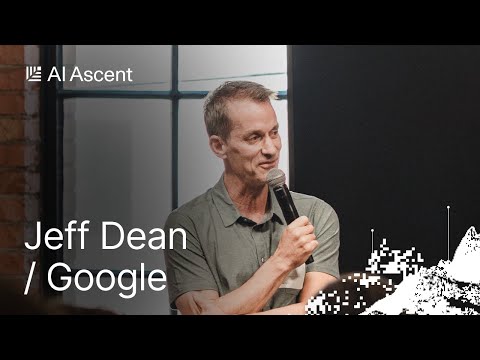
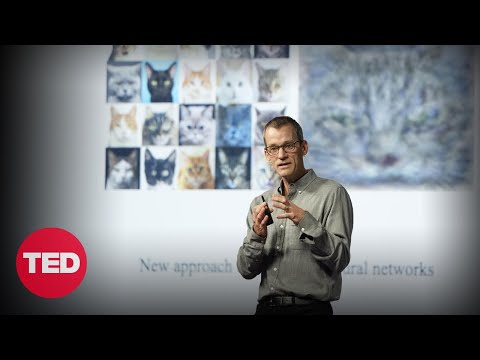
Jeff Dean is a co-founder of Discovery Loop, a public benefit corporation started in August 2026 to build AI that can automatically solve problems in machine learning, science, and engineering. He left Google after almost 27 years, most recently as Chief Scientist of Google DeepMind and a Google Senior Fellow. He led or co-led many of Google's most important technical projects, including MapReduce, BigTable, TensorFlow, and the Tensor Processing Unit (TPU), and his work on large-scale distributed systems and machine learning has been foundational to modern AI infrastructure. His co-founders are fellow Google veterans Sanjay Ghemawat, Oriol Vinyals, and Quoc Le; Alphabet led the seed round and remains a cloud partner.
Key Contributions
- Co-designed MapReduce and Bigtable, two systems that defined Google's large-scale data infrastructure
- Helped build Spanner and other distributed systems that made global-scale storage and computation more reliable
- Led Google Brain and DistBelief, helping move deep learning from research code into industrial-scale tooling
- Helped make TensorFlow a standard tool for machine learning teams beyond Google
- Supported Google's TPU program, making custom AI accelerators a core part of modern model training and serving
- Co-authored scaling and systems papers that shaped how large neural networks are trained across data centers
- Represents both Google's technical depth and its frustration: world-class AI infrastructure that has often been slower to productize than rivals
- Left Google in August 2026 to co-found Discovery Loop with Sanjay Ghemawat, Oriol Vinyals, and Quoc Le, betting that the next leverage lies in automating discovery itself rather than in any single model
Videos & Interviews
Connections

Andrew Ng
CollaboratedAI Pioneer & Educator
Google Brain began in 2011 as a side project between a Google Fellow who knew how to make thousands of machines behave like one and a visiting Stanford professor convinced that what neural networks lacked was scale rather than cleverness. It was among the first places that conviction was handed industrial compute. The two then split along the field's two great roles: Dean stayed to build the infrastructure everything else runs on, Ng left to teach the thing to millions of people who would use it.
en.wikipedia.org · en.wikipedia.org · youtube.com

Demis Hassabis
CollaboratedChairman, Google DeepMind & Chief Scientist, Alphabet
For three years they ran Google's AI as a pair: when Brain and DeepMind were merged in April 2023, Hassabis became CEO of the combined lab and Dean its Chief Scientist — the builder of the infrastructure seated beside the builder of the agents. On stage in 2025 Dean still spoke of 'my colleague Demis' winning the Nobel as if reporting a household event. Then on 5 August 2026 both stepped aside on the same day, Dean to found Discovery Loop, Hassabis to chairman and Alphabet chief scientist, inheriting the title Dean left behind.
blog.google · the-decoder.com · youtube.com

Geoffrey Hinton
CollaboratedAI Pioneer & Researcher
Hinton arrived at Google in 2013 when it acquired his three-person company and joined the Brain team Dean had co-founded; two years later the two of them, with Oriol Vinyals, wrote 'Distilling the Knowledge in a Neural Network.' The paper showed that a large model's soft probabilities carry more instruction than the hard labels it was trained on — a small model can learn from a big one's uncertainty. A decade on, distillation is both how frontier capability reaches ordinary devices and the technique at the center of international arguments over who is allowed to learn from whose model.
arxiv.org · en.wikipedia.org

Chris Lattner
CollaboratedCo-founder & CEO, Modular
Lattner joined Google Brain in 2017 to run TensorFlow's infrastructure with Dean as his manager, and by his own account MLIR began in a single sentence from him: I agree we have a compiler problem — go build a new compiler to unify this mess. What came out was a shared intermediate representation that lets many frameworks target many chips, including the TPUs Dean had helped will into existence. It is a reminder that most of what makes large models possible is not architecture but plumbing, built by people who read hardware and language as one problem.
modular.com · en.wikipedia.org

