
John Vervaeke
Cognitive Scientist & Philosopher
About
John Vervaeke is a professor of cognitive science at the University of Toronto, known for his work on relevance realization, wisdom, and the meaning crisis. His lecture series 'Awakening from the Meaning Crisis' has gained a worldwide following. His framework of relevance realization—how minds determine what matters—offers deep insights into both human cognition and the challenges of building AI systems that can truly understand context and meaning.
Key Contributions
- Developed relevance realization as a framework for how minds determine what matters in context
- Created 'Awakening from the Meaning Crisis,' a long-form lecture series connecting cognitive science, philosophy, and spirituality
- Brought University of Toronto cognitive-science teaching into a global online audience without abandoning academic scaffolding
- Studies wisdom, self-transcendence, and transformative experience as cognitive capacities rather than vague self-help terms
- Offers AI discussions a useful contrast: intelligence requires salience and context, not just information retrieval
- His synthesis has a devoted audience, though its breadth can make it hard to separate academic theory from existential pedagogy
Questions they sharpened View the streams
What is knowing?
Knowing comes in four kinds — propositional, procedural, perspectival, participatory — and only the first fits in sentences.
What remains human?
The stake isn't a skill machines might match — it's whether we keep the practices that put us in contact with what's real. The meaning crisis is losing that grip; the machines didn't cause it, but they can deepen it or help us recover it.
Can intelligence be measured?
2012Any fixed benchmark fixes the frame in advance — it tells the system what counts as a task. But general intelligence is precisely the power to reframe: to decide, unprompted, what the task even is.
How does a mind know what matters?
2012Relevance realization: a mind doesn't compute what matters, it continuously self-organizes toward it — trading generality against precision, staying poised between too much focus and too little. It's a standing act, not a rule you could write down.
What is intelligence?
2012Intelligence is relevance realization — the standing capacity to zero in on what matters here and now without checking everything. Not information, not skill: the art of ignoring almost all of it.
Does an LLM actually understand?
2019Understanding is participatory, not just propositional. You grasp something by being gripped by it — caring, coping, having a stake in a world — not by predicting the next token about it. A system can hold all the propositions and still not be in contact.
Does reality descend or emerge?
2019A world explained purely from below can say how things came to be, but not why some are more real, more worth becoming. Meaning needs the vertical that emanation guarded — a 'more real than real' to climb toward — recovered, not deleted, by the naturalist.
What is a self?
2019The self isn't a thing you have but a relationship you're in — an agent fitted to its arena. The grasping ego that fears its own dissolution is not the whole of it; wisdom is loosening that identification without losing the person.
What is real?
2019Realness is not just existence but the depth of your contact with it — graded by how fully you participate. Losing that contact is the meaning crisis.
Videos & Interviews
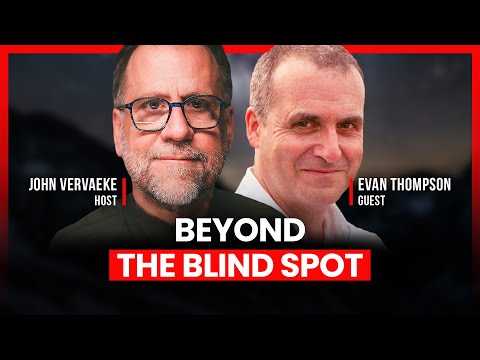
The Blind Spot in Perception: Cognitive Science, Asian Philosophy, and Mystical Insight
Conversation with John Vervaeke exploring how cognitive science, philosophy, and mysticism converge
View Details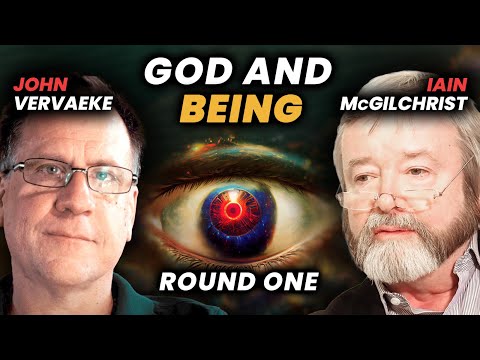
Iain McGilchrist & John Vervaeke: God, Being, Meaning
Deep dialogue on consciousness, meaning, and the nature of reality
View Details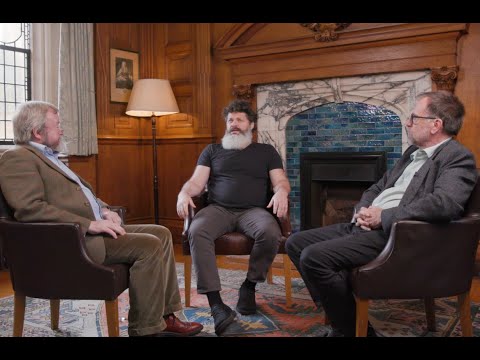
The Psychological Drivers of the Metacrisis: John Vervaeke, Iain McGilchrist, Daniel Schmachtenberger
Trilogue on the deep psychological and cognitive roots of civilizational challenges
View Details
Awakening from the Meaning Crisis - Ep. 1
First episode of the influential lecture series on meaning, wisdom, and cognition
View Details
John Vervaeke: Meaning Crisis, Atheism, Religion & the Search for Wisdom
Lex Fridman Podcast #317 - Discussion on meaning, wisdom, and what AI is missing
View Details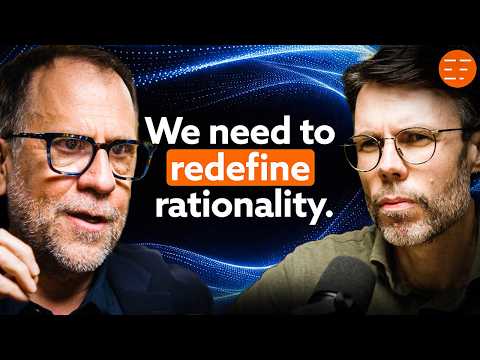
Lost Psycho-Technologies: When Our Minds Were At Their Best | John Vervaeke
Vervaeke joins Hans Busstra of the Essentia Foundation to trace the historical roots of the meaning crisis through psychotechnologies — culturally developed mental tools that transform how humans think, perceive, and make sense of reality. The arc runs from shamanism and soul flight through the axial revolution, Socratic dialogue, and the Christian notion of agape, asking when meaning was at its peak and what was lost on the way to modernity.
View Details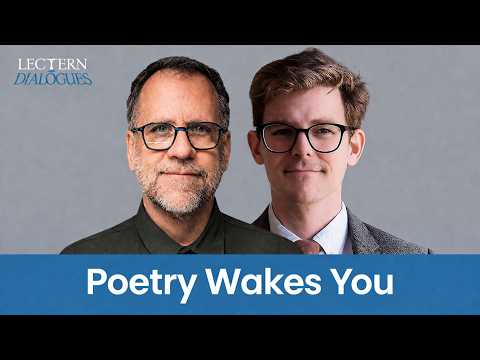
Poetry Wakes You to Reality | John Vervaeke & Adam Walker
A conversation with Adam Walker on how poetry awakens perception and reconnects us to reality.
View Details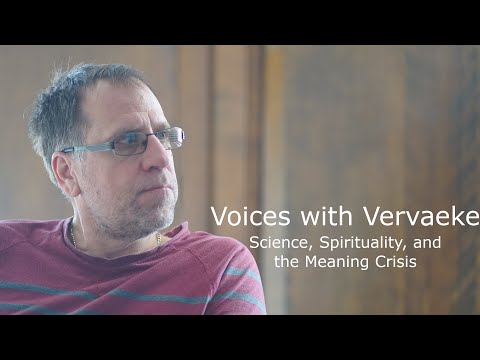
Emergence-emanation, Whitehead, Kastrup: a dialectic ontology w/ Matt Segall - Voices with Vervaeke
Segall and Vervaeke work the axis between emanation and emergence: does reality descend from the One, as Plotinus taught, or climb from below, as Whitehead's process philosophy suggests — and can a dialectical ontology hold both? A follow-up to their Whitehead dialogue, set between Vervaeke's conversations with Bernardo Kastrup.
View Details
Ep. 18 - Awakening from the Meaning Crisis - Plotinus and Neoplatonism
Vervaeke's Meaning Crisis episode devoted to Plotinus — how he wove Plato, Aristotle, and the Stoics into a single spiritual system in which all reality emanates from the One, and the philosophical life becomes the soul's contemplative ascent back toward its source.
View DetailsPapers & Publications
Connections

Iain McGilchrist
In conversationPsychiatrist, Neuroscientist & Author
Vervaeke and McGilchrist have made their dialogue a running institution — two of the conversations are on this site, from 'God, Being, Meaning' to the psychological drivers of the metacrisis. What keeps them talking is a shared diagnosis reached by different instruments: attention is not a spotlight but a way of loving the world, and a culture that optimizes it for grasping loses what can only be met.
youtube.com

Plato
Influenced byPhilosopher of Classical Athens
Vervaeke names him outright — Spinoza and Plato are 'two huge influences on me' — and the debt runs through the whole project. Meno's paradox, how you can seek what you do not yet know how to recognize, is the puzzle relevance realization was built to answer; the cave supplies the two-worlds picture Awakening from the Meaning Crisis traces from Athens to the present; and the dialogues supply the method, truth known only retrospectively, through a process of self-transcendence. A cognitive scientist who reads Plato not as doctrine but as an ecology of practices, and then tries to rebuild it.
youtube.com · youtube.com

Evan Thompson
In conversationPhilosopher of Mind & Cognitive Science
Their recorded dialogue on The Blind Spot — on this site — meets at the place both careers point: cognitive science keeps deleting the experience it depends on. Thompson arrives via enactivism and Asian philosophy, Vervaeke via relevance realization and the practices he calls ecologies; both hold that knowing is participatory before it is propositional.
youtube.com

Joscha Bach
In conversationAI Researcher & Cognitive Scientist
Their three-hour 'Theolocution' on Theories of Everything (2022) is a sustained negotiation between two rival accounts of mind: Bach's — that consciousness is a simulation the brain runs of itself — and Vervaeke's — that knowing is participatory and cannot be exhausted by computation. They disagree fruitfully, which is rarer than agreeing.
youtu.be

