John von Neumann
Mathematician & Computer Architecture Pioneer
About
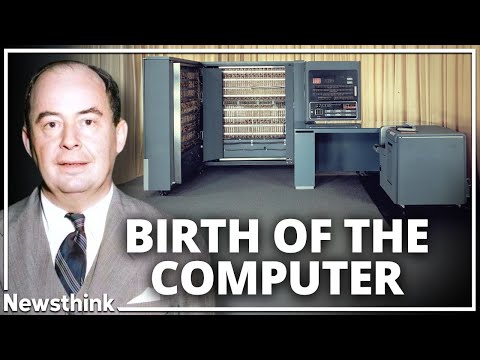
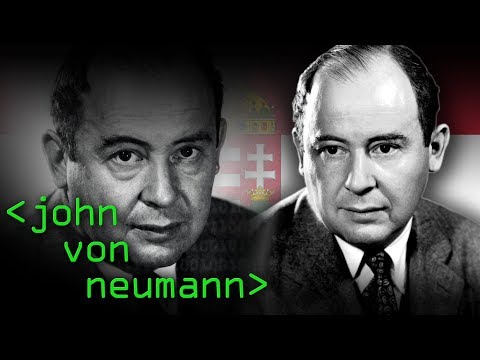
John von Neumann (1903–1957) was a Hungarian-American mathematician whose contributions span mathematics, physics, economics, and computer science. He designed the von Neumann architecture—the stored-program concept that remains the basis for virtually all modern computers. He co-founded game theory, contributed to quantum mechanics, and worked on the Manhattan Project. His late work on self-replicating automata and the brain as a computing machine anticipated key ideas in AI and artificial life.
Key Contributions
- Articulated the stored-program computer architecture associated with EDVAC, still the template for most conventional computers
- Co-founded game theory with 'Theory of Games and Economic Behavior,' shaping economics, strategy, and multi-agent reasoning
- Helped put quantum mechanics on a rigorous mathematical footing through Hilbert-space formalism and operator methods
- Advanced numerical analysis and early high-speed scientific computing, including work that fed into weather prediction and simulation
- Worked on the Manhattan Project and later nuclear strategy, making his legacy technically vast and morally uneasy
- Developed cellular automata and self-reproducing automata, anticipating artificial life and parts of theoretical AI
- Influenced economics, physics, computing, and military policy enough that his name became attached to several fields, not just one architecture