
Jürgen Schmidhuber
Director, KAUST AI Initiative & Scientific Director, IDSIA
About
Jürgen Schmidhuber has been called the father of modern AI — most insistently by himself, which is part of what makes him essential. In his Munich lab's astonishing 1990–91 stretch he proposed artificial curiosity (two networks locked in an adversarial game, years before GANs), the controller–world-model pair that David Ha would make concrete decades later, and the analysis of vanishing gradients by his student Sepp Hochreiter that led to the LSTM — the architecture that, by the mid-2010s, ran speech recognition and translation on billions of phones. His 1987 diploma thesis proposed machines that learn how to learn; his 2003 Gödel machine — a formally self-improving program — lent its name to the Darwin Gödel Machine our era is now building. His GPU-trained CNNs were winning vision contests in 2011, before AlexNet. He directs the AI Initiative at KAUST and remains scientific director of Swiss lab IDSIA — and remains the field's most relentless keeper of its own memory, insisting the history of deep learning is longer and less Anglo-American than its Nobel narratives.
Key Contributions
- Co-created the LSTM with his student Sepp Hochreiter — for two decades the recurrent workhorse of speech and translation on billions of devices
- His 1990–91 lab prefigured much of modern AI: artificial curiosity as an adversarial game (before GANs), world models, and generative pretraining
- Proposed meta-learning — machines that learn how to learn — in his 1987 diploma thesis, a research program the field caught up to 30 years later
- Conceived the Gödel machine (2003), a formally self-improving program — namesake and ancestor of today's Darwin Gödel Machine
- His DanNet GPU-trained CNNs won four vision contests in 2011, pre-AlexNet — the sharpest exhibit in his lifelong case that credit in AI runs shallow
Videos & Interviews

Juergen Schmidhuber: Godel Machines, Meta-Learning, and LSTMs
Lex Fridman's eleventh episode, recorded before the podcast was famous and before the field admitted how much of it Schmidhuber had sketched first. He walks through the 1990–91 ideas — curiosity as compression progress, networks that model the world, programs that improve themselves — with the cheerful certainty of a man who believes history will need to be corrected in his favor. The Gödel machine section is the ancestor's-eye view of everything this atlas now files under self-improving AI.
View Details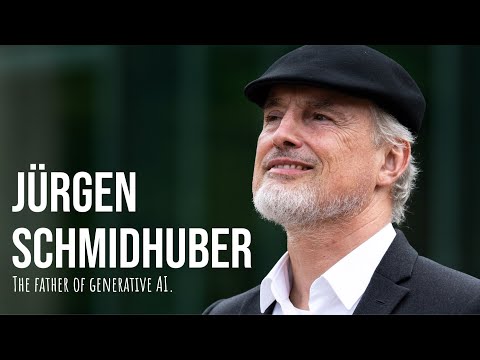
The Man Who Invented Modern AI (Before Everyone Else) — Jürgen Schmidhuber
Machine Learning Street Talk gives Schmidhuber the two things he has always wanted: time, and the premise of the title. The result is the best single tour of his case — LSTM, artificial curiosity before GANs, GPU vision before AlexNet, self-improvement before it was a startup pitch — and of the temperament behind it: a man genuinely more interested in AIs that set their own goals than in the LLMs everyone else came to ask him about. Watch it beside the deep-learning founders' pages and decide the credit question for yourself.
View DetailsConnections

David Ha
CollaboratedCo-founder & CEO, Sakana AI
World Models (2018) has exactly two authors: the trader-turned-researcher and the man who had sketched the controller–world-model idea in 1990 and waited three decades for compute to catch up. Their paper — an agent learning inside its own dreamed environment — is the rare collaboration where one author supplies the ancient blueprint and the other makes it run, and its fingerprints are on every 'world model' claim the field now makes.
arxiv.org

Jeff Clune
InfluencedProfessor, University of British Columbia
The Darwin Gödel Machine — Clune's lab with Sakana — takes its name, and its ambition, from Schmidhuber's 2003 Gödel machine: the paper's abstract opens by crediting that 'theoretical alternative,' a self-improving AI that rewrites itself. Clune's whole program runs on ideas Schmidhuber seeded — artificial curiosity, self-improvement, learning to learn — swapped from proof to Darwin: where the Gödel machine demanded provable benefit, the DGM keeps an archive and lets empirical evolution decide.
arxiv.org · people.idsia.ch

Yann LeCun
DebatedChief AI Scientist, Meta
When LeCun, Bengio, and Hinton published their Nature review of deep learning in 2015, Schmidhuber published a point-by-point rebuttal accusing the 'deep learning conspiracy' of citing themselves and erasing the field's earlier history — and LeCun answered in public, more than once. It is the sharpest sustained dispute in the field about a deceptively deep question: who a scientific revolution belongs to, the ones who planted it or the ones who harvested.
people.idsia.ch

Richard Sutton
KindredFounder, Oak Lab & Professor, University of Alberta
In 1990, working an ocean apart, both men proposed agents that learn a model of the world and plan inside it — Sutton's Dyna, Schmidhuber's controller–world-model pair. Both spent the decades since insisting that intelligence is an agent's ongoing negotiation with its environment, not a frozen artifact of a dataset. Two stubborn architects of the same unfashionable conviction, now watching the field circle back to it.

