
Marshall McLuhan
Media Theorist & Philosopher
About
Marshall McLuhan (1911–1980) was a Canadian philosopher and communications scholar whose work became foundational to media theory. A professor at the University of Toronto, he analyzed how communication technologies reshape perception, culture, and social organization. His famous phrase "the medium is the message" argued that the form of a medium often matters more than the content it carries. His ideas about the "global village," electronic media, and technological environments remain central to understanding digital networks, AI interfaces, and the social effects of computation.
Key Contributions
- Argued that 'the medium is the message,' shifting attention from content to the environments created by communication technologies
- Developed the 'global village' frame for electronic media, anticipating networked simultaneity before the web
- Wrote 'The Gutenberg Galaxy' and 'Understanding Media,' making print, television, and electronic media objects of cultural theory
- Distinguished hot and cool media, giving later media theory a vocabulary for participation, attention, and sensory intensity
- Treated media as extensions of the human sensorium, a useful lens for AI interfaces that reshape attention and agency
- His aphoristic style made him famous and portable, but also easy to overquote, misread, and detach from careful analysis
Questions they sharpened View the streams
Are we separate from our machines?
1964Our tools are extensions of us — of the body, and finally of the nervous system. We shape them, and thereafter they shape us, until where the person ends and the equipment begins is no longer obvious.
What is technology?
1964The medium is the message. Technologies are extensions of us that quietly remake the ones who use them.
Books

Videos & Interviews
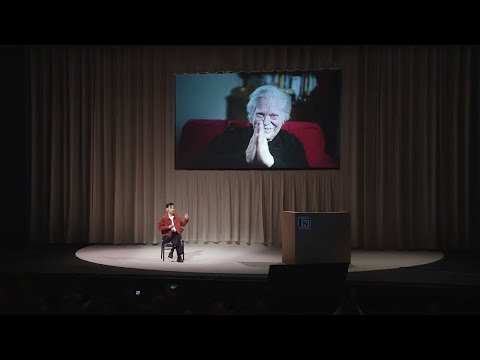
Make with Notion 2025: How to Build Tools That Shape Civilizations (Alan Kay & Ivan Zhao)
Alan Kay and Ivan Zhao discuss tools, learning, media environments, and how software can shape civilization.
View Details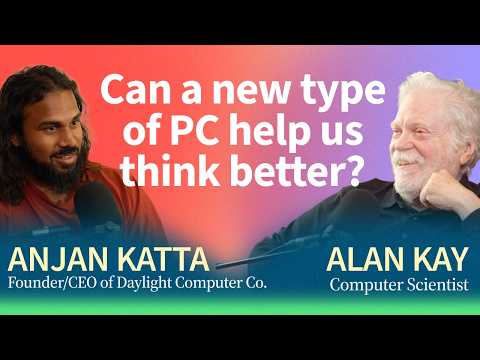
Why the Real Computer Revolution Never Happened (Alan Kay & Anjan Katta)
Alan Kay and Anjan Katta discuss why personal computing did not fulfill its deeper educational and creative potential.
View Details

