
Max Tegmark
Physicist & AI Safety Researcher
About
Max Tegmark is a physics professor at MIT and co-founder of the Future of Life Institute (FLI), a leading AI safety organization. Author of 'Life 3.0: Being Human in the Age of Artificial Intelligence,' he has been a prominent voice for responsible AI development. He spearheaded the 2023 open letter calling for a pause on training AI models larger than GPT-4, signed by over 50,000 individuals including leading AI researchers.
Key Contributions
- Contributed to cosmology and popularized the mathematical-universe hypothesis through physics research and public writing
- Co-founded the Future of Life Institute, one of the organizations that brought existential-risk framing into AI policy
- Wrote 'Life 3.0,' translating long-term AI alignment and governance questions for a broad public audience
- Organized the 2023 open letter calling for a pause on training systems more powerful than GPT-4
- Used his MIT physics platform to connect AI risk with broader questions about intelligence, cosmology, and humanity's future
- His pause advocacy made AI risk mainstream, but was criticized as impractical, alarmist, or beneficial to already-dominant labs
Videos & Interviews

Max Tegmark: Life 3.0
Lex Fridman Podcast #1 - Foundational conversation on AGI and the future of intelligent life
View Details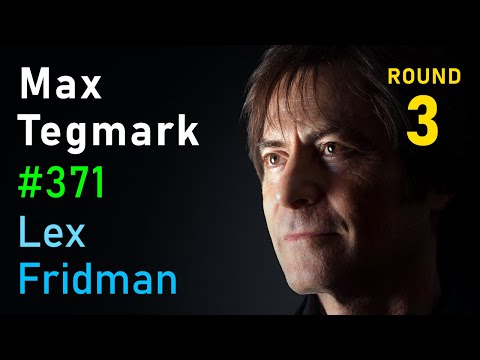
Max Tegmark: The Case for Halting AI Development
Lex Fridman Podcast #371 - Discussion on AI safety, the pause letter, and existential risks
View Details
Munk Debate on Artificial Intelligence | Bengio & Tegmark vs. Mitchell & LeCun
Four of the field's most prominent voices, two by two, on one resolution: be it resolved, AI research and development poses an existential threat. Bengio and Tegmark argue the pro; Mitchell and LeCun the con — and the hall moved toward the skeptics. What makes the debate worth watching is not the verdict but the spectacle of experts who share a technical picture and still forecast opposite futures: the clearest evidence that AI risk is not a question expertise alone can settle.
View DetailsConnections

Stuart Russell
CollaboratedProfessor of Computer Science, UC Berkeley
In 2015, months after the Puerto Rico conference that produced FLI's first open letter, Russell wrote 'Research Priorities for Robust and Beneficial Artificial Intelligence' with Daniel Dewey and Tegmark — the document that gave the warning a technical spine, converting alarm into a fundable research agenda. The division of labour has held ever since: Tegmark builds the public instrument (FLI, Life 3.0, the 2023 pause letter) while Russell supplies the argument from inside computer science that the fault lies in the discipline's standard model of what an AI system is for.
doi.org · Research Priorities for Robust and Beneficial Artificial Intelligence, AI Magazine 36(4), 2015 — S. Russell, D. Dewey & M. Tegmark · futureoflife.org

Yann LeCun
DebatedExecutive Chairman & Co-founder, AMI Labs; Professor, NYU
At the Munk Debate in June 2023, Tegmark and Bengio argued that AI research and development poses an existential threat; LeCun and Melanie Mitchell argued it does not, and the hall moved three points toward them. Tegmark had spent that spring organizing the pause letter; LeCun treats the entire frame as a category error about machines with no drive to dominate. The exchange is worth reading as evidence of how little a shared technical picture constrains the forecast drawn from it.
en.wikipedia.org

Nick Bostrom
In contrastPhilosopher & Founding Director, Future of Humanity Institute (2005–2024)
Two institutional answers to the same premise, founded a decade apart and an ocean apart. Bostrom's Future of Humanity Institute treated existential risk as a research problem for philosophers and stayed inside Oxford until the university closed it in 2024; Tegmark's Future of Life Institute treated it as a public one and spent its capital on open letters, media and legislation. Read together they pose a question this atlas keeps meeting: whether careful argument or organized alarm does more for a risk nobody can yet measure.

