
Michael Sandel
Political Philosopher, Harvard University
Trace a path from Michael Sandel →Portrait painted after an image by Fronteiras do Pensamento / Luiz Munhoz · CC BY-SA 2.0
About
Michael J. Sandel (born 1953) is an American political philosopher and the Anne T. and Robert M. Bass Professor of Government at Harvard, where he has taught since 1981. A Rhodes Scholar, he wrote his Oxford doctorate under Charles Taylor, and his first book, Liberalism and the Limits of Justice (1982), challenged John Rawls's picture of the 'unencumbered self', a person defined prior to the ties and communities that make up a life. His later books carry the same question into public life: Democracy's Discontent (1996), The Case Against Perfection (2007), What Money Can't Buy (2012), on the moral limits of markets, and The Tyranny of Merit (2020), on how meritocracy teaches the successful to look down on those left behind. His course Justice, one of Harvard's most attended, was the first Harvard course made freely available online and has been watched by tens of millions.
Key Contributions
- Challenged Rawls's 'unencumbered self' in Liberalism and the Limits of Justice (1982)
- Made political philosophy a public conversation through Harvard's Justice course, free online and on television
- Argued in What Money Can't Buy (2012) that markets crowd out the goods they price
- Diagnosed meritocratic hubris and the politics of humiliation in The Tyranny of Merit (2020)
- Received the Princess of Asturias Award for Social Sciences (2018) and the Berggruen Prize (2025)
Videos & Interviews
Connections

Daron Acemoglu
InfluencedInstitute Professor of Economics, MIT
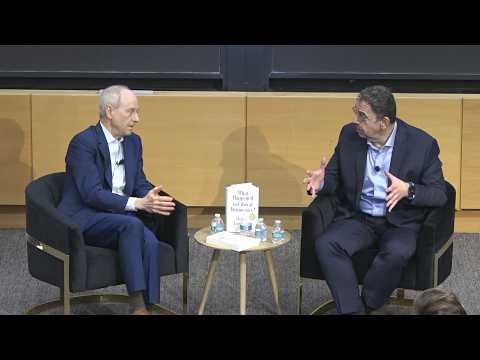
In their MIT conversation Acemoglu names three debts to Sandel: the role of community, from his earlier work; the way a meritocratic reading of success and failure humiliates those not doing as well; and contributive justice, the idea that people need not only consumption but the sense of contributing. All three run through Acemoglu's working-class liberalism, which holds that redistribution cannot stand in for wage growth and the dignity of work.
youtube.com · Daron Acemoglu, What Happened to Liberal Democracy? Remaking a Politics of Shared Prosperity (2026)

Aristotle
Influenced byPhilosopher & Founder of the Lyceum
Against the liberal ideal of a state neutral among ways of life, Sandel argues as Aristotle did that justice has a telos: to ask what a practice is for is to ask what virtues it should honour and reward. His Justice turns from Bentham, Kant and Rawls to Aristotle to make that case, and with Daron Acemoglu he reaches back to Aristotle again, for the idea that democracy once meant government by lottery.
Michael J. Sandel, Justice: What's the Right Thing to Do? (2009) · en.wikipedia.org · youtube.com

Immanuel Kant
In contrastPhilosopher of the Enlightenment
Sandel teaches Kant with real sympathy: the dignity of persons as ends in themselves is close to the moral centre of his Justice course. What he resists is the Kantian self that Rawls inherited, a chooser standing prior to all its ends, which he argues cannot account for the obligations of solidarity and membership we never chose.
Michael J. Sandel, Liberalism and the Limits of Justice (1982) · en.wikipedia.org

