
Sam Altman
CEO, OpenAI
About
Sam Altman is the CEO of OpenAI, the company behind ChatGPT and GPT-4. Previously, he was president of Y Combinator, one of the world's most successful startup accelerators. Under his leadership, OpenAI has become one of the most influential AI companies in the world, pioneering the development of large language models and making them accessible to the public.
Key Contributions
- Ran Y Combinator during its high-growth era; Tad Friend's 2016 New Yorker profile captured both his ambition and his polarizing style
- Invested across startups and hard-tech bets, including energy, biotech, and identity projects such as Worldcoin
- Co-founded OpenAI around a public-benefit AGI mission, then led its shift toward a capped-profit, product-driven AI company
- Led the 2022 launch of ChatGPT, making conversational LLMs a mainstream interface for work, education, and software
- Built OpenAI's Microsoft partnership and API business, accelerating frontier AI adoption while drawing criticism over closed models and concentrated power
- Became the face of AI governance tensions after his 2023 firing and reinstatement exposed conflict between OpenAI's nonprofit board and commercial momentum
Videos & Interviews
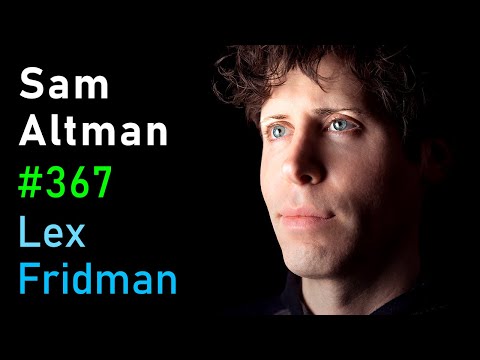
Connections

Ilya Sutskever
CollaboratedCo-founder, Safe Superintelligence Inc.
Both were there at OpenAI's December 2015 launch — Altman as co-chair, Sutskever as the research director who became chief scientist — and they became the two poles of its unresolved question: whether a company can keep building something it believes might be dangerous. In November 2023 Sutskever voted to remove Altman from the board, then within days said publicly that he regretted it; Altman stayed, Sutskever left to found Safe Superintelligence. The rupture remains the most candid thing the industry has said aloud about who governs whom.
en.wikipedia.org · en.wikipedia.org · techcrunch.com

Dario Amodei
CollaboratedCEO & Co-founder, Anthropic
Amodei was OpenAI's VP of Research under Altman from 2016 and the last author on the GPT-3 paper, before leaving in 2021 over differences of direction to found the competitor built around the safety case. The relationship has an unresolved coda: in November 2023 OpenAI's board approached Amodei about replacing Altman and merging the two labs, and he declined both. Two men who built the same technology and have never agreed on who should be trusted to steward it.
en.wikipedia.org · arxiv.org

Nick Bostrom
Influenced byPhilosopher & Founding Director, Future of Humanity Institute (2005–2024)
In February 2015, ten months before OpenAI launched, Altman posted 'Machine intelligence, part 1' — the development of superhuman machine intelligence is 'probably the greatest threat to the continued existence of humanity' — and sent readers to Bostrom's Superintelligence as 'the best thing I've seen on this topic.' A philosopher's argument that a capable optimizer is dangerous by default became a founding rationale for deliberately building one, on the theory that it is safer done in the open. Whether that inference actually follows is the unresolved question inside the entire industry.
blog.samaltman.com

Daniel Kokotajlo
DebatedExecutive Director, AI Futures Project
Kokotajlo left OpenAI in 2024 and walked away from roughly two million dollars in vested equity rather than sign a lifelong non-disparagement agreement, then said so publicly; within a day Altman was posting that the company had 'never clawed back anyone's vested equity, nor will we,' and calling the clause an embarrassment he had not known about. OpenAI struck it from its exit paperwork weeks later. The disagreement was never about capabilities — it was about whether the people closest to a technology are free to describe it, which is the precondition for every other argument on this site.
cybernews.com · righttowarn.ai

