
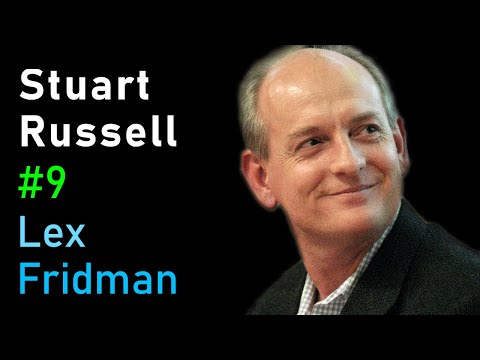
Stuart Russell
Professor of Computer Science, UC Berkeley
About
Stuart Russell is a professor of computer science at UC Berkeley and co-author of 'Artificial Intelligence: A Modern Approach,' the most widely used AI textbook in the world. His research spans machine learning, probabilistic reasoning, and AI safety. He has become a leading voice on the existential risks of advanced AI, arguing that we need to fundamentally rethink how we build AI systems to ensure they remain beneficial and under human control.
Key Contributions
- Co-authored 'Artificial Intelligence: A Modern Approach,' the textbook that standardized how generations of students learned AI
- Founded UC Berkeley's Center for Human-Compatible AI to study systems that remain useful under uncertainty about human preferences
- Advanced probabilistic reasoning and decision-theoretic approaches, grounding AI in uncertainty rather than brittle rule systems
- Worked on inverse reinforcement learning and preference uncertainty, technical foundations for human-compatible AI
- Authored 'Human Compatible,' arguing that optimizing fixed objectives is the wrong foundation for advanced AI
- Helped move AI safety and autonomous-weapons concerns into mainstream computer science, though critics see his risk framing as too speculative or alarmist
Questions they sharpened View the streams
Whose values, when we align?
2019The machine should be uncertain about what humans want — alignment is deference, not obedience to a fixed objective.
Would superintelligence be dangerous by default?
2019The problem is control, not evil: a machine optimizing a fixed, slightly-wrong objective has every reason to resist being switched off.
Books

Videos & Interviews

Connections

Max Tegmark
CollaboratedPhysicist & AI Safety Researcher
In 2015, months after the Puerto Rico conference that produced FLI's first open letter, Russell wrote 'Research Priorities for Robust and Beneficial Artificial Intelligence' with Daniel Dewey and Tegmark — the document that gave the warning a technical spine, converting alarm into a fundable research agenda. The division of labour has held ever since: Tegmark builds the public instrument (FLI, Life 3.0, the 2023 pause letter) while Russell supplies the argument from inside computer science that the fault lies in the discipline's standard model of what an AI system is for.
doi.org · Research Priorities for Robust and Beneficial Artificial Intelligence, AI Magazine 36(4), 2015 — S. Russell, D. Dewey & M. Tegmark · futureoflife.org

Nick Bostrom
In contrastPhilosopher & Founding Director, Future of Humanity Institute (2005–2024)
Both concluded that a sufficiently capable optimizer is dangerous without needing to be hostile, and they arrived from opposite ends of the building. Bostrom argued it philosophically — orthogonality and instrumental convergence make the danger a property of optimization itself — while Russell rewrote a premise his own textbook had taught for thirty years: stop handing machines fixed objectives. One diagnosis leaves you a problem to fear; the other leaves you an architecture to change.

Yoshua Bengio
CollaboratedAI Pioneer & Safety Researcher
Both are among the twenty-five authors of 'Managing extreme AI risks amid rapid progress' (Science, 2024) — a masthead unusual for seating deep-learning founders beside a Nobel-winning psychologist and a historian. Two months later they were two of the three names endorsing Right to Warn, the whistleblower letter written by OpenAI's own staff. Bengio now chairs the International AI Safety Report and Russell sits on its expert panel: the pattern is a field trying to assemble a referee out of its own senior researchers.
arxiv.org · doi.org · righttowarn.ai

