
Yann LeCun
Executive Chairman & Co-founder, AMI Labs; Professor, NYU
About
Yann LeCun is Executive Chairman and co-founder of Advanced Machine Intelligence Labs (AMI Labs), the Paris company he started in December 2025 after announcing that November that he would leave Meta, where he had been Chief AI Scientist for ten years. AMI Labs builds world models — systems that learn from physical reality rather than text, around his JEPA architecture — with Alexandre LeBrun as CEO and Saining Xie as chief science officer; in March 2026 it raised $1.03 billion at a $3.5 billion pre-money valuation. He remains a professor at NYU. One of the pioneers of deep learning, he is known for the convolutional neural networks (CNNs) that revolutionized computer vision, shared the 2018 Turing Award with Geoffrey Hinton and Yoshua Bengio, and in 2025 shared the Queen Elizabeth Prize for Engineering.
Key Contributions
- Developed convolutional neural networks for document recognition, including LeNet systems used for bank check reading
- Helped establish gradient-based learning for vision, work recognized with the 2018 Turing Award alongside Hinton and Bengio
- Co-created DjVu image compression and contributed practical tools beyond neural-network research
- Built FAIR's research culture at Meta and pushed large-scale AI research toward open publication and open-source releases
- Championed world models and energy-based learning as alternatives to purely autoregressive LLM scaling
- Became a forceful critic of AI-doom narratives, drawing both support and criticism for downplaying near-term and existential risk claims
- Left Meta in 2025 to co-found AMI Labs in Paris, turning the world-model argument into a billion-dollar institutional bet against the language-model paradigm
Questions they sharpened View the streams
Moments Timeline View all moments
Videos & Interviews

Munk Debate on Artificial Intelligence | Bengio & Tegmark vs. Mitchell & LeCun
Four of the field's most prominent voices, two by two, on one resolution: be it resolved, AI research and development poses an existential threat. Bengio and Tegmark argue the pro; Mitchell and LeCun the con — and the hall moved toward the skeptics. What makes the debate worth watching is not the verdict but the spectacle of experts who share a technical picture and still forecast opposite futures: the clearest evidence that AI risk is not a question expertise alone can settle.
View Details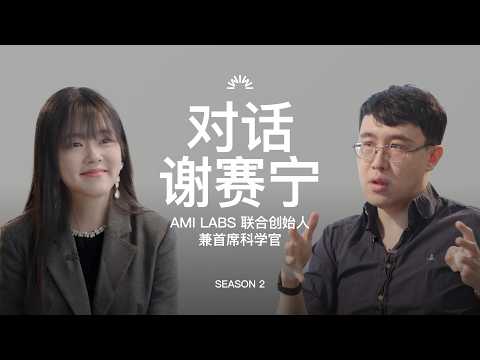
A 7-hour marathon interview with Saining Xie: World Models, AMI Labs, Yann LeCun, Fei-Fei Li, and 42
Wide-ranging conversation covering world models, the founding of AMI Labs, and reflections on AI research
View Details![Yann LeCun's $1B Bet Against LLMs [Part 1]](https://img.youtube.com/vi/kYkIdXwW2AE/hqdefault.jpg)
Yann LeCun's $1B Bet Against LLMs [Part 1]
LeCun raised a billion dollars to pursue an approach that is neither rooted in language nor generative: by design it does not produce text, images, or video. The alternative is JEPA — not a model but a training framework. Where a language model learns to predict the text that follows, and a classifier learns to predict a label, JEPA passes both input and output through models and works in the space between them.
View Details![Yann LeCun's $1B Bet Against LLMs [Part 2]](https://img.youtube.com/vi/v_jDvpEGTIg/hqdefault.jpg)
Yann LeCun's $1B Bet Against LLMs [Part 2]
The second half of the case for JEPA, and against the assumption that scaling language models is the road to anything like understanding. Read alongside Sutton arguing on Dwarkesh that LLMs are a dead end, it is the same dissent from a different direction — and with a billion dollars behind it rather than an argument alone.
View Details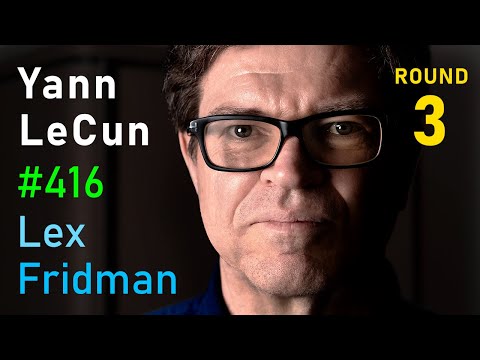
Yann LeCun: Meta AI, Open Source, Limits of LLMs, AGI & the Future of AI
Lex Fridman Podcast #416 - Discussion on AI architectures and Meta's approach
View DetailsPapers & Publications
Connections

Yoshua Bengio
DebatedAI Pioneer & Safety Researcher
They built LeNet together at Bell Labs, co-authored the 1998 paper that taught machines to read handwriting, shared the 2018 Turing Award — and in June 2023 took opposite podiums at the Munk Debate, Bengio arguing that AI development poses an existential threat, LeCun arguing it does not. Nothing separates them technically; they read the same architectures and forecast different futures. Their split is the clearest evidence that AI risk is not a question expertise alone can settle.
en.wikipedia.org · en.wikipedia.org

Geoffrey Hinton
Influenced byAI Pioneer & Researcher
LeCun spent his postdoctoral year in Hinton's Toronto lab before leaving for Bell Labs, where the convolutional networks he built there learned to read handwritten bank checks. Thirty years later the two shared the 2018 Turing Award for the same body of work. The lineage held on method and broke on prophecy: Hinton now warns of extinction-level risk, LeCun treats the warning as a category error.
en.wikipedia.org · en.wikipedia.org

Max Tegmark
DebatedPhysicist & AI Safety Researcher
At the Munk Debate in June 2023, Tegmark and Bengio argued that AI research and development poses an existential threat; LeCun and Melanie Mitchell argued it does not, and the hall moved three points toward them. Tegmark had spent that spring organizing the pause letter; LeCun treats the entire frame as a category error about machines with no drive to dominate. The exchange is worth reading as evidence of how little a shared technical picture constrains the forecast drawn from it.
en.wikipedia.org

Saining Xie
CollaboratedCo-founder & CSO, AMI Labs
Xie was LeCun's colleague in Meta's FAIR before becoming co-founder and chief science officer of AMI Labs, the Paris company LeCun started in December 2025 after leaving Meta over its bet on language models. They are building world models — systems trained on physical reality rather than text — around LeCun's JEPA architecture. It is the most heavily funded institutional wager yet that the current paradigm is a detour.
en.wikipedia.org · techcrunch.com

Ilya Sutskever
In contrastCo-founder, Safe Superintelligence Inc.
An interpretive pairing of two people reading the same evidence in opposite directions. Sutskever's premise is that predicting the next token well enough forces a model of the reality that produced it; LeCun's is that text is a shadow cast by the world, and no quantity of shadow adds up to the thing. Both left the labs they helped define in order to pursue their answer — Sutskever toward safe superintelligence, LeCun toward world models.

